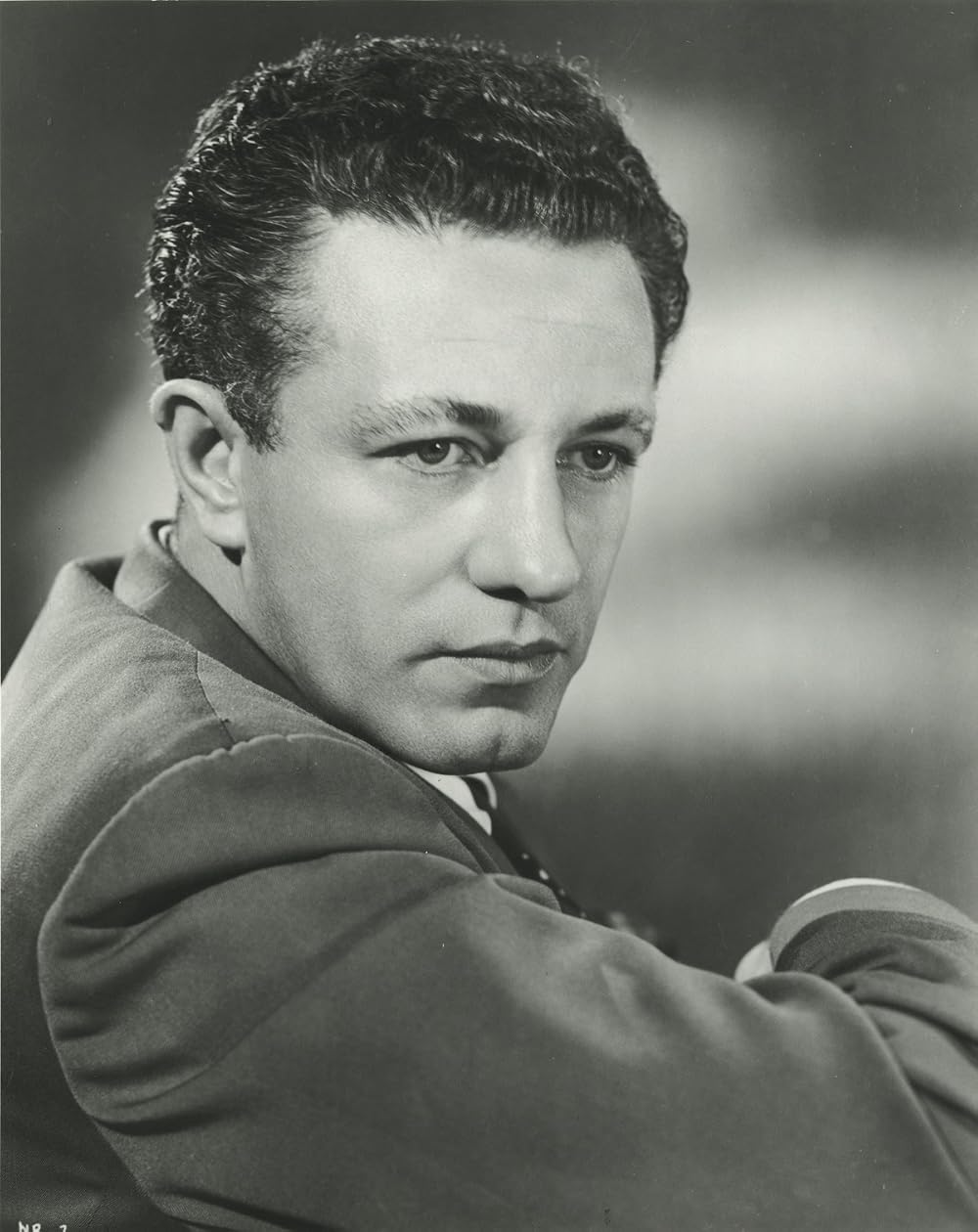
Director
Nicholas Ray
A rebellious Hollywood visionary battles studio constraints to craft groundbreaking cinema, leaving a legacy as both an artist and a tragic figure in postwar American film.
- Galesville, Wisconsin, USA·New York City, New York, USA
- 1.85 m (6'1")
- Also:
- Writer
- Actor
Biography
Nicholas Ray was born Raymond Nicholas Kienzle in 1911 in Galesville, Wisconsin, to Lena (Toppen) and Raymond Joseph Kienzle, a contractor and builder; he was of German and Norwegian descent. While in high school he gained early experience with film through radio broadcasting. After one year at the University of Chicago he left, but impressed professor and writer Thornton Wilder enough to be recommended for a scholarship with Frank Lloyd Wright, where he learned about space, geography, and later developed an appreciation for CinemaScope. Political differences with Wright led Ray to move to New York, where he became involved in radical theater, joining the Theatre of Action and meeting Elia Kazan, and later the Group Theatre. During this period he participated in the Socialist/Communist movement alongside other Group members. In January 1937 the Department of Agriculture’s Resettlement Administration put Ray in charge of local theater activities, prompting a move to Washington with his wife Jean Evans, who was pregnant with their first child, Anthony. He also traveled with Alan Lomax through the South recording folk musicians for the Library of Congress; the collaboration later resulted in a CBS evening slot headed by Woody Guthrie in the early 1940s. Ray divorced Jean and subsequently befriended John Houseman, who asked him to produce shows for the Overseas Branch of the Office of War Information, a project that ended quickly due to political pressures. When Elia Kazan was called to Hollywood to direct A Tree Grows in Brooklyn (1945), he hired Ray as his assistant, introducing Ray to filmmaking. Houseman later recalled Ray to New York, where Ray made his live‑TV debut with the popular Sorry, Wrong Number (1946) and performed additional radio work. In 1946 Houseman lent Ray Edward Anderson’s novel Thieves Like Us; although uncredited for the screenplay, Ray contributed significantly to its adaptation. Producers Houseman and Dore Schary supported the project, allowing Ray a rare period of satisfaction in his career. The film starred Farley Granger and Cathy O’Donnell as young lovers fleeing the law and is noted for Ray’s camera work—including early helicopter use—its pace, and his empathy for outsiders; it was shelved for two years after Howard Hughes took over RKO, released briefly in England before its U.S. debut. Ray then accepted A Woman’s Secret (1949) without much deliberation; the film is chiefly remembered for introducing actress Gloria Grahame, who became his second wife. Ray described the production as “a disastrous experience,” partly because of his meeting with Grahame. After Grahame divorced her husband and became pregnant, she and Ray married in Las Vegas on the same day of her divorce; their marriage quickly deteriorated, with Grahame spending the honeymoon alone while Ray gambled nearly $40,000 in one night. Publicity claimed Grahame’s separation preceded their meeting and that their son Timothy was born four months premature, statements contradicted by other evidence. The couple separated a year later after Ray discovered Grahame in bed with his son by Jean Evans; they divorced in 1952. Although They Live by Night (1948) remained unreleased in the United States at the time, private screenings reached figures such as Humphrey Bogart, who invited Ray to direct his first independent production, Knock on Any Door (1949), for Columbia. Despite initial puzzlement over Ray’s emotional directing style, the two became friends; the film achieved modest success, though Ray later expressed regret that Luis Buñuel had not made The Young and the Damned (1950) before him. Back at RKO, Ray was required to make films aligned with Howard Hughes’s preferences rather than his own, yet his left‑leaning views and prior Communist Party association did not affect his career during the Red Scare because of his friendship with Hughes. Consequently he produced titles such as Born to Be Bad (1950), starring Joan Fontaine, and Flying Leathernecks (1951).
Family & relationships
- Spouse
- Parents
- Raymond Nicholas Kienzle Sr.
- Children
Filmography · 1 of 1
Other crew
1 credit
Edit history
Loading edit history…
Comments (0)
on Nicholas RayNo comments yet. Be the first to share what you think.