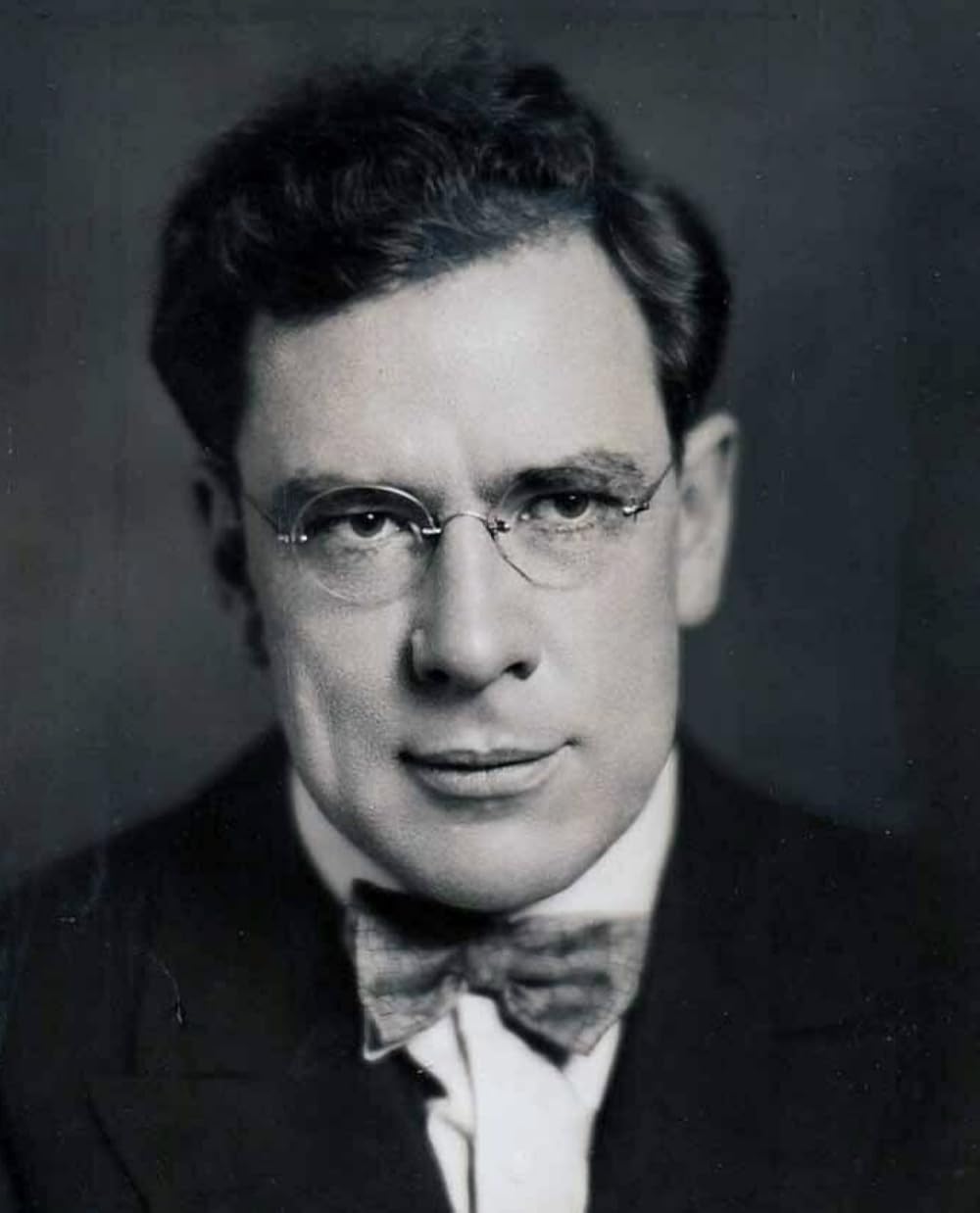
Writer
Maxwell Anderson
- Atlantic, Pennsylvania, USA·Stamford, Connecticut, USA
- Also:
- Music Department
Biography
James Maxwell Anderson was born in Atlantic, Pennsylvania, on December 15, 1888 to William Lincoln Anderson and Charlotte Perrimela (Stephenson) Anderson. He was the second child of the couple and spent his early years on his maternal grandmother’s farm in Atlantic before the family moved to Andover, Ohio when he was three. His father attended a seminary at night while working as a railroad fireman, later becoming a traveling minister whose frequent relocations took the family through Ohio, Iowa, North Dakota and Pennsylvania until they settled in Jamestown, North Dakota in 1907. After graduating from Jamestown High School, Anderson entered the University of North Dakota in 1908, supporting himself as a waiter and on the night copy desk of The Grand Forks Herald. He joined the literary society Ad Altiora, contributed to the Dacotah Annual, and assisted the Sock and Buskin Dramatic Society as assistant director. He earned a Bachelor of Arts in English literature in June 1911 and married his classmate Margaret Haskett on August 1, 1911; they had three sons, Quentin, Alan and Terence. Anderson’s first post‑college position was principal and English teacher at Minnewaukan High School in North Dakota, but after making pacifist remarks to students his contract was not renewed. He moved to Palo Alto, California, enrolled in a master’s program in English literature at Stanford University and graduated in 1914. He then taught high school English in San Francisco for three years before becoming chairman of Whittier College’s English department in 1917; he was dismissed after one year for publicly supporting a student seeking conscientious‑objector status during World War I. Returning to San Francisco, Anderson worked as a journalist for the San Francisco Chronicle and the San Francisco Bulletin, then took an editorial post at The New Republic in New York City, also serving as a stringer for the New York Globe and the New York World and helping launch the poetry magazine Measure. He wrote his first play, the verse drama White Desert, in 1923; it ran only twelve performances but attracted the notice of New York World critic Laurence Stallings, who chose Anderson as collaborator on the World War I play What Price Glory?. Opening on September 3, 1924, the production ran for 430 performances and enabled Anderson to leave journalism for full‑time dramatics. Many of his plays were written in verse and addressed social or moral issues; Winterset (1935), dealing with the Sacco & Vanzetti trials in fictional form, won the first New York Critics Circle Award. He received the 1933 Pulitzer Prize for Drama for Both Your Houses and repeated as Critics Circle winner for High Tor in 1936. Anderson wrote historical dramas and two librettos for Kurt Weill—Knickerbocker Holiday (1938) and Lost in the Stars (1940)—and authored the lyric “September Song” from Knickerbocker Holiday. His stage works included Elizabeth the Queen (1930), Mary of Scotland (1933), Key Largo (1939), Truckline Café (1945), Joan of Lorraine (1946), Anne of the Thousand Days (1947) and The Bad Seed (1954). He contributed to screenplays such as All Quiet on the Western Front (1930, Academy Award nomination), Washington Merry‑Go‑Round (1932), Rain (1932), Death Takes a Holiday (1934) and So Red the Rose (1935); several of his plays were adapted for film, including Mary of Scotland (1936), Saturday’s Children (filmed three times), Winterset (1936), Elizabeth the Queen (as The Private Lives of Elizabeth and Essex, 1939), The Eve of St. Mark (1944), Knickerbocker Holiday (1944), Key Largo (1948), Joan of Lorraine (as Joan of Arc, 1948), The Bad Seed (1956), The Devil’s Hornpipe (as Never Steal Anything Small, 1959) and Anne of the Thousand Days (1969). What Price Glory? was filmed as a silent picture in 1926 and remade by John Ford in 1952. Anderson published two poetry collections—You Who Have Dreams (1925) and Notes on a Dream (posthumous, 1972)—and two essay volumes, The Essence of Tragedy and Other Footnotes and Papers (1939) and Off Broadway Essays About the Theatre (1947). His first wife Margaret died on February 26, 1931; he married Gertrude “Mab” Higger in 1933, and they had a daughter, Hesper, born August 12, 1934. After Gertrude’s death on March 21, 1953, Anderson wed Gilda Hazard on June 6, 1954. He received honorary Doctor of Literature degrees from Columbia University (1946) and the University of North Dakota (1958), and the National Institute of Arts and Letters Gold Medal in Drama in 1954. Anderson suffered a stroke on February 26, 1959 and died two days later in Stamford, Connecticut. His body of work comprises more than thirty published plays and over a dozen unpublished ones.
Filmography · 1 of 1
Other crew
1 credit
Edit history
Loading edit history…
Comments (0)
on Maxwell AndersonNo comments yet. Be the first to share what you think.